The internet is very good at telling you what to read. It is almost useless at telling you what not to.
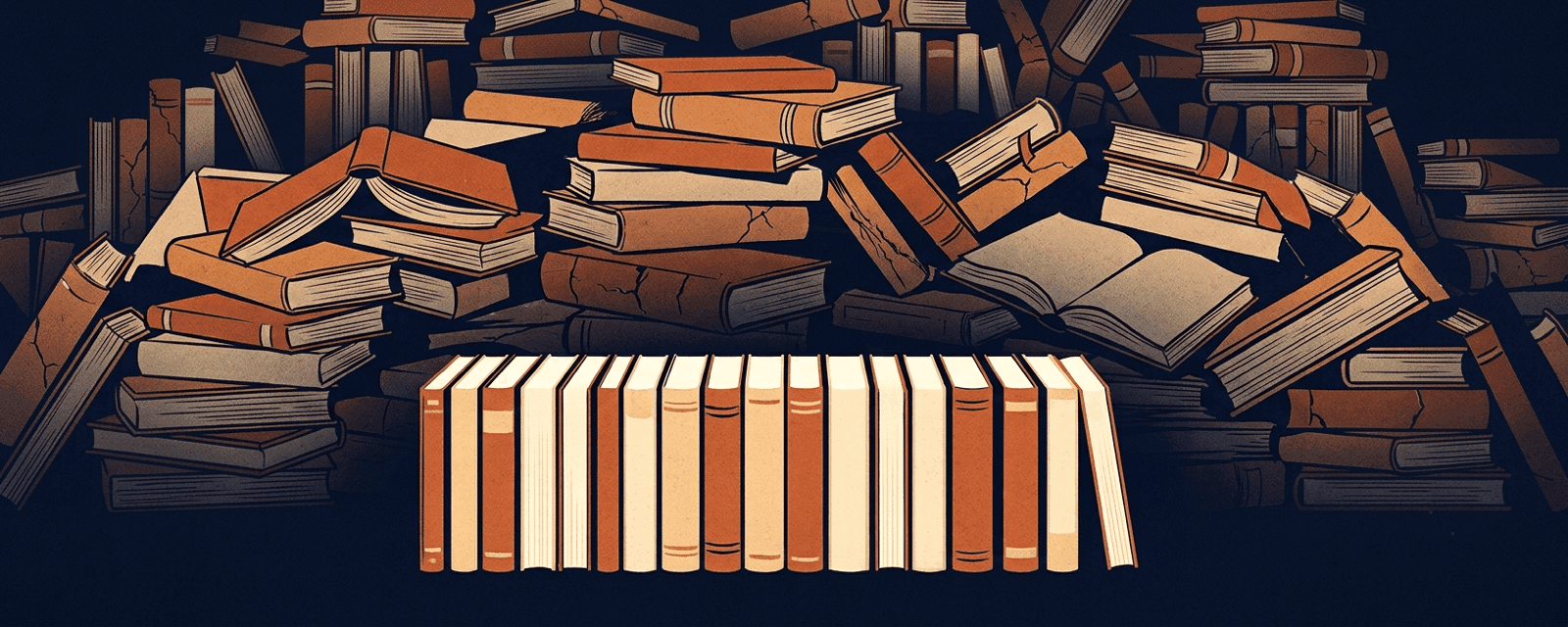
That asymmetry is the whole problem, and once you see it you can’t unsee it. Every reading platform ever built is a machine for adding to your pile. More shelves, more recommendations, more challenges, more things to save for later. The pile grows and grows and it is understood, everywhere and without argument, that a bigger pile is a better outcome. Nobody has ever built a feature whose explicit job is to make your to-read list shorter.
Discovery is a solved problem
For most of history the constraint on reading was access. Books were expensive, libraries were finite, and the hard part was finding the next good thing. Every institution we inherited, the bestseller list, the review section, the recommendation engine, was built to solve scarcity of options.
That scarcity is gone and it is not coming back. Book output topped four million titles in a single year, most of it self-published, and that’s before you count everything already sitting on shelves from the last few centuries. You could read a book a day for the rest of your life and not make a dent, and the machine adds new ones faster than you could ever remove them.
So finding a book is trivial now. What’s genuinely hard, and getting harder, is avoiding the mediocre ones. The bottleneck moved, and almost nothing in the reading world moved with it.
Every platform is rewarded when your pile grows
Here’s the uncomfortable part, and it isn’t a conspiracy so much as physics. A saved book is engagement. A recommendation clicked is engagement. A want-to-read shelf ticking past three hundred titles is a user who is invested, active, coming back. The metrics that platforms live and die by, the ones that get reported up and turned into growth charts, all point in the direction of more.
Abundance is the business model. It just happens to be measured in your unspent hours.
None of the incumbents are being cynical about this. They’re being rational. A system optimized for engagement will optimize for the pile, because the pile is what engagement looks like when you write it down. The trouble is that the pile is not the same thing as reading, and past a certain size it becomes actively hostile to it.
There’s an old and very famous experiment about this. A grocery store set out a tasting table with jams, sometimes six varieties and sometimes twenty-four. The big display pulled a bigger crowd, which is exactly the engagement metric a platform would celebrate. But of the people who saw twenty-four jams, three percent actually bought one. Of the people who saw six, thirty percent did. More options drew more attention and produced far less of the thing that was supposedly the point. A to-read list of four hundred books is the twenty-four-jam table, permanently, in your pocket.
The reader pays in hours
The reason this matters more for books than for almost anything else is the size of the unit. A bad song costs you three minutes. A bad recommendation from your streaming service costs you a swipe. A bad book costs you somewhere between six and fourteen hours of the only genuinely nonrenewable thing you have, and worse, it usually costs you those hours in installments, a resentful forty minutes at a time, over three weeks, before you finally admit it isn’t happening.
And the cost compounds. We’ve written before about where readers actually quit, and the real damage of an abandoned book isn’t the wasted hours. It’s what it does to the next book. Every bad pick makes starting anything feel like a worse bet, and enough of them in a row and a person stops reading altogether without ever deciding to. The pile that was supposed to represent enthusiasm becomes a monument to guilt.
So when a system cheerfully adds a fifth mediocre thriller to your queue because it’s technically similar to something you rated highly, it isn’t being helpful. It’s spending your hours on your behalf, at no cost to itself, and calling the transaction a recommendation.
A recommendation that can’t say no isn’t one
Here’s the thing I keep coming back to. If a system genuinely understood your taste, the most valuable sentence it could ever produce is not “here’s another one you might like.” It’s “skip this one.”
Think about how you actually use the people whose taste you trust. The friend who reads everything is useful precisely because they’ll tell you the acclaimed novel everyone’s posting about is not for you, don’t bother, you’ll bounce off it in fifty pages. That’s a real recommendation. It carries information and it costs the friend something to say, because saying no is riskier than saying yes. Say yes and you might be wrong quietly. Say no and you’re on record steering someone away from a book they might have loved.
Software almost never takes that risk, and the reason is structural. Confident rejection requires actually modeling a person, not just correlating them with people who bought similar things. It’s easier and safer to widen the funnel and let the reader sort it out, which is how you end up with recommendation engines that are technically accurate and practically useless, agreeable machines that have never once told you not to bother.
The real metric is regret avoided
So I think the objective is just wrong, at the root. These systems optimize for books added, pages tracked, time in app, because those are easy to measure and they make the charts go up. The thing a reader-first product should actually optimize for is regret avoided, and I mean that almost literally as a metric, even though it’s a hard one and we’re early at measuring it.
Not how many books you saved, but how few hours you lost to books that were never going to work for you. Not the size of your queue, but your confidence that the next thing you pick up is worth the six hours it’s going to ask for. A product built around that number looks strange next to everything else in the category, because most of its value is invisible. It shows up as the bad Tuesday night you never had, the three weeks you didn’t spend resenting a book you should never have started.
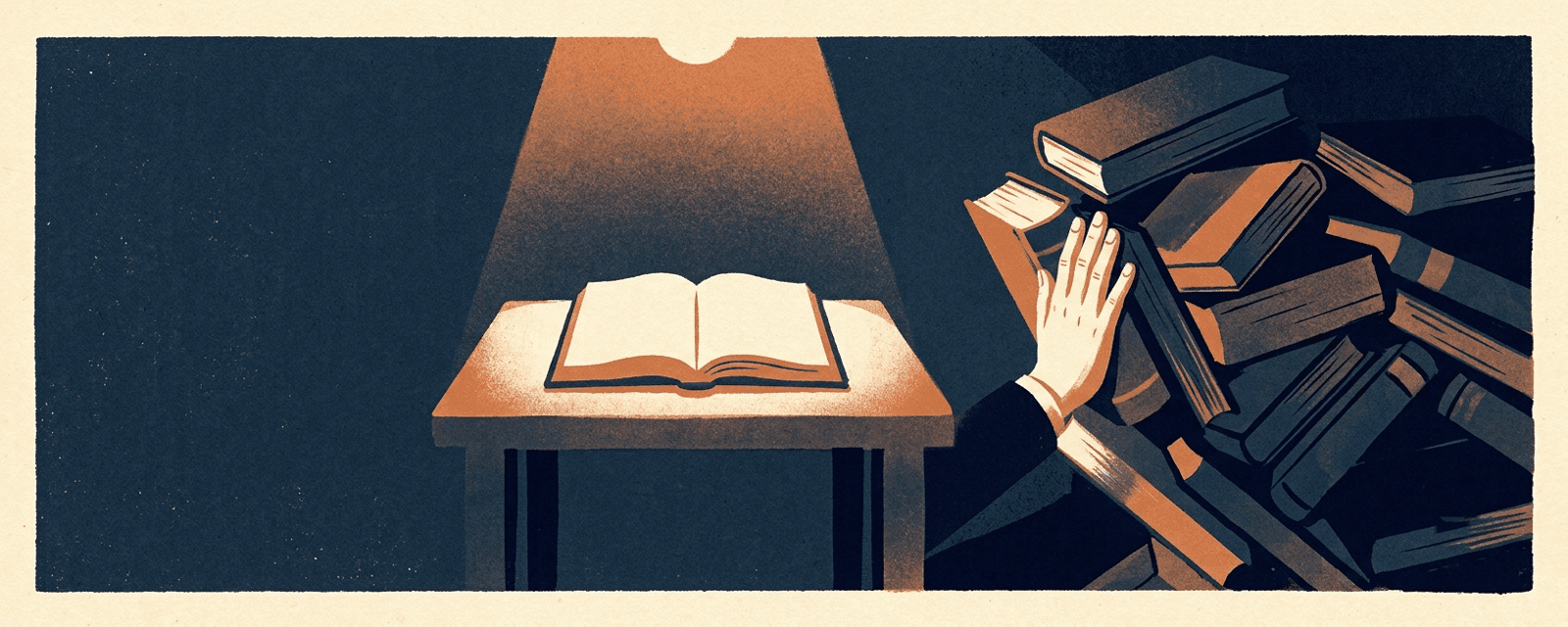
This is bigger than books, obviously. It’s the whole shape of attention right now. Every feed, every recommendation surface, every AI that will generate infinite plausible slop on request, all of them optimize for volume because volume is what the machine can see. The scarce thing, the only actually scarce thing, is a filter you trust. Something that has your taste and your interests in mind and is willing to spend its credibility telling you no.
What we’re building toward
This is most of what Siftivo is actually for, even though it’s an awkward thing to market, because “we’ll give you fewer books” is a strange pitch in an industry that sells more. The daily shortlist is a handful of considered picks instead of a browsable ocean on purpose. The books you skip count as signal, not failure. We would genuinely rather show you three books and be right than three hundred and let you drown, and we treat the confidence to leave things out as the hard part of the job rather than an admission that we ran out.
It’s the same instinct behind the Reading Index, which measures what’s actually in circulation instead of what’s merely for sale. Both are bets on the same idea, that in a world this crowded the useful move is subtraction, and that selectivity is a service rather than a snub.
In a world with more books than anyone could finish, the best recommendation is often the one that saves you from starting.
If that’s the reading problem you actually have, come see what we’re doing.